
From crunching numbers to pressing grapes
Tom Cannon CA swapped EY and private equity for entrepreneurship, founding award-winning English rosé brand Folc – but the lessons from his CA training remain central to his success
Interview: Lysanne Currie
Photography/Video: Phillip Xia
From crunching numbers to pressing grapes
Tom Cannon CA swapped EY and private equity for entrepreneurship, founding award-winning English rosé brand Folc – but the lessons from his CA training remain central to his success
Interview: Lysanne Currie
“That talk took me into dreamland,” recalls Tom Cannon of a day during his CA training that would change the course of his life. “ICAS used to invite different guest speakers to talk to students about where you could go with your career. One talk that stood out to me was from an entrepreneur. He spoke about how the CA training was a great base for business and to encourage us to follow our passions. I remember thinking maybe that will be me. That day sowed the seed.”
Years later, that seed has grown and flourished. Tom’s mission: “To prove English wine can be just as good as French wine – if not better.”
Numbers first
Tom grew up in Wimbledon, south-west London. His father worked in finance and loved wine, so the two subjects were often discussed around the Sunday lunch table.
Tom was good with numbers at school, studied maths at A level and then economics at the University of Bristol. His interest in wine was already developing too. “I always found understanding the different grape varieties very interesting, where they are grown, and how that affects the different taste and profile.”
After graduating with a respectable 2:1, a career plan seemed unclear, but he knew he needed to play to his strengths. EY’s graduate programme offered the ideal opportunity: paid work and training in chartered accountancy, giving him a strong technical foundation while giving him time to work out what he wanted to do next.
“Everything I learned during my CA training was very relevant to my EY day job and is still relevant to me now as a CEO and founder”
In 2013, Tom joined EY, working in its banking and capital markets team. Here he learned what financial institutions actually looked like and how to audit them. But more importantly, “Everything I learned there was very relevant to the day job and is still relevant to me now as a CEO and founder. I didn’t really appreciate it at the time, but there are things you learn throughout your qualification that serve you later in life.”
One of the most important is an understanding of cash flow. “First and foremost, when you’re running a startup or an early-stage business, cash is king.”
Being able to forecast where the cash balance will be after investing in stock has proved invaluable, he says.
It has also helped Folc grow. “With any early-stage business, you’re always looking for growth year on year,” says Tom. “Businesses die when they run out of cash and can’t progress any further, because they haven’t planned accordingly.”
For Tom, this is where a grounding in accountancy has been particularly useful, understanding that when it comes to marketing, resource, hiring and stock investment “there are different levers you need to pull”.
The other benefit is psychological. “There are always 1,000 problems to be fixed, and you’ll take many knocks. It’s an emotional rollercoaster. The highs are high, but the lows are lower the next minute.”
Tom’s CA training taught him how to step back and look at a business holistically, creating some distance from those regular stomach lurches. “Understanding the bigger picture is probably the most valuable skill I’ve taken from my CA qualification, and I’m hugely grateful for it.”
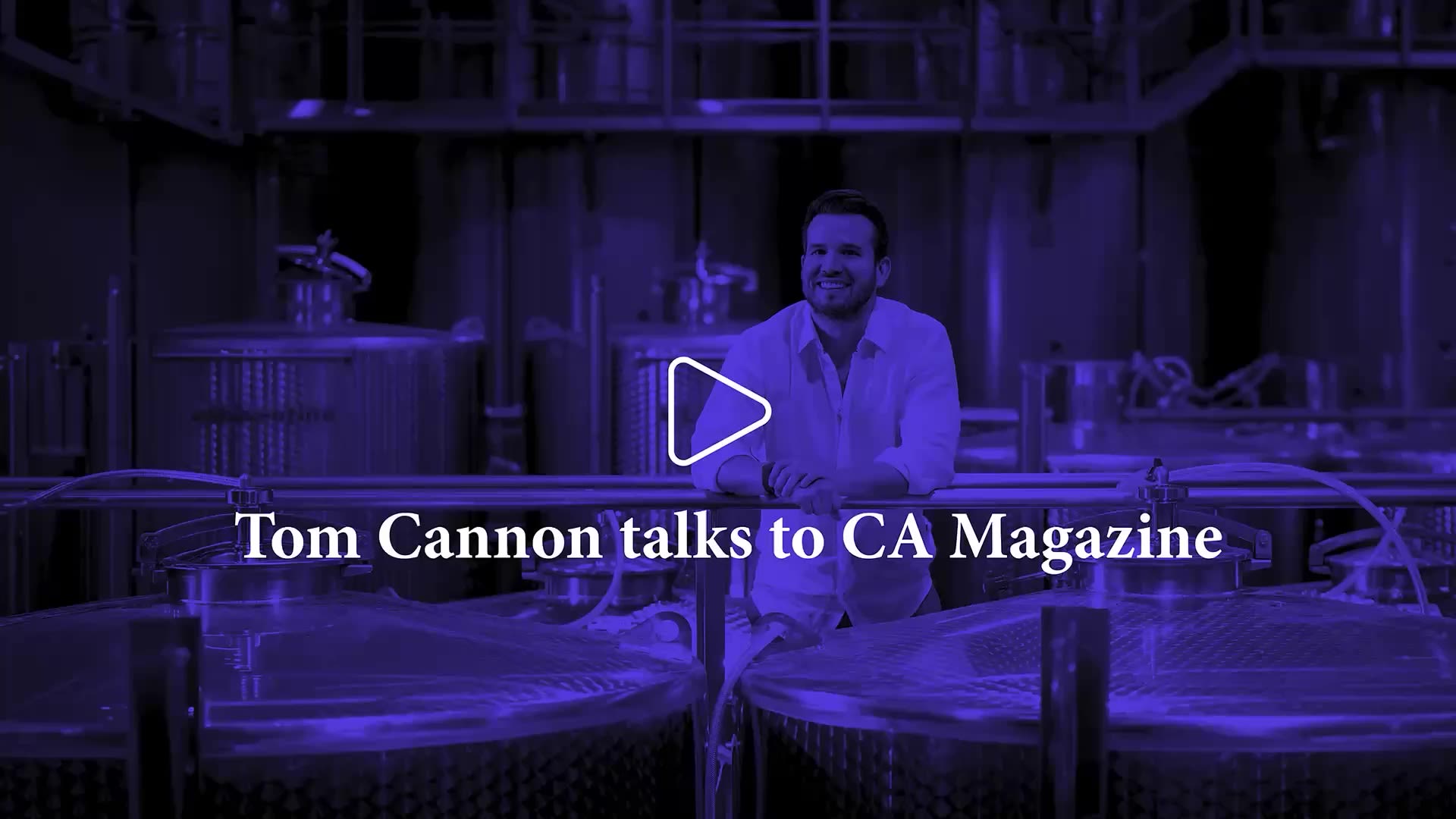
After EY, he decided to “follow the money a little bit”, moving into private equity as a “young and hungry” twenty-something. It gave him insight into the world of private equity and its portfolio companies, but “working 80- to 90-hour weeks for someone else wasn’t necessarily what I wanted,” he says. “I realised life isn’t all about money.”
What interested him most was understanding how the portfolio companies themselves operated. This led him into the earlier-stage world of venture capital, where he joined Seedrs, now known as Republic Europe, as a portfolio manager.
Working with hundreds of startups – from new businesses to companies generating millions in annual revenue and ultimately achieving successful exits – gave him “a crash course in entrepreneurship”. And, more significantly, “it gave me the itch that I potentially felt needed to be scratched”.
Wine time
The lightbulb moment came while he was working with English vineyard and winemaker Chapel Down on a fundraiser – prompting him to “go down the rabbit hole” to examine the wine market more closely.
Tom discovered a curious anomaly. Although the UK is the world’s largest importer of rosé by value, English wine growers are overwhelmingly focused on sparkling wine. This is largely because parts of southern England share similar soil and climatic conditions with the French Champagne region, making them well suited to growing the grape varieties traditionally used for sparkling wine.
Drawing on what he had learnt in venture capital, he saw an opportunity to “build the benchmark for English rosé”. He’d create a brand for modern drinks consumers that “didn’t take itself too seriously”, while still producing great quality wines. “So, I took the plunge.”
“I didn’t really appreciate it at the time, but there are things you learn throughout your CA qualification that serve you later in life”
In October 2019, Tom and his wife Elisha founded Folc, a small wine company based in south-east England. With the rising temperatures of recent years creating ideal conditions for growing grapes in areas such as Kent and Surrey, they wanted to challenge the belief that great rosé could only be made in France.
The unusual name is an Old English word meaning ‘people’, ‘pride’ or ‘tribe/family’ – and springs from Tom’s desire to bring people together around wine and remove some of the snobbery and “culture of elitism” associated with it.
They needed to test the concept before committing significant time and money, so started with a small batch of just 1,000 bottles. And not owning his own winery or vineyard, Tom adopted a model commonly used in the south of France: buying grapes from specialist growers in Kent and Hampshire and using a contract winery, Canterbury-based Defined Wine, to make the wine, before bottling, branding and selling it.
“That talk took me into dreamland,” recalls Tom Cannon of a day during his CA training that would change the course of his life. “ICAS used to invite different guest speakers to talk to students about where you could go with your career. One talk that stood out to me was from an entrepreneur. He spoke about how the CA training was a great base for business and to encourage us to follow our passions. I remember thinking maybe that will be me. That day sowed the seed.”
Years later, that seed has grown and flourished. Tom’s mission: “To prove English wine can be just as good as French wine – if not better.”
Numbers first
Tom grew up in Wimbledon, south-west London. His father worked in finance and loved wine, so the two subjects were often discussed around the Sunday lunch table.
Tom was good with numbers at school, studied maths at A level and then economics at the University of Bristol. His interest in wine was already developing too. “I always found understanding the different grape varieties very interesting, where they are grown, and how that affects the different taste and profile.”
After graduating with a respectable 2:1 a career plan seemed unclear, but he knew he needed to play to his strengths. EY’s graduate programme offered the ideal opportunity: paid work and training in chartered accountancy, giving him a strong technical foundation while giving him time to work out what he wanted to do next.
“Everything I learned during my CA training was very relevant to my EY day job and is still relevant to me now as a CEO and founder”
In 2013, Tom joined EY, working in its banking and capital markets team. Here he learned what financial institutions actually looked like and how to audit them. But more importantly, “Everything I learned there was very relevant to the day job and is still relevant to me now as a CEO and founder. I didn’t really appreciate it at the time, but there are things you learn throughout your qualification that serve you later in life.”
One of the most important is an understanding of cash flow. “First and foremost, when you’re running a startup or an early-stage business, cash is king.”
Being able to forecast where the cash balance will be after investing in stock has proved invaluable, he says.
It has also helped Folc grow. “With any early-stage business, you’re always looking for growth year on year,” says Tom. “Businesses die when they run out of cash and can’t progress any further, because they haven’t planned accordingly.”
For Tom, this is where a grounding in accountancy has been particularly useful, understanding that when it comes to marketing, resource, hiring and stock investment, “there are different levers you need to pull”.
The other benefit is psychological. “There are always 1,000 problems to be fixed, and you’ll take many knocks. It’s an emotional rollercoaster. The highs are high, but the lows are lower the next minute.”
Tom’s CA training taught him how to step back and look at a business holistically, creating some distance from those regular stomach lurches. “Understanding the bigger picture is probably the most valuable skill I’ve taken from my CA qualification, and I’m hugely grateful for it.”
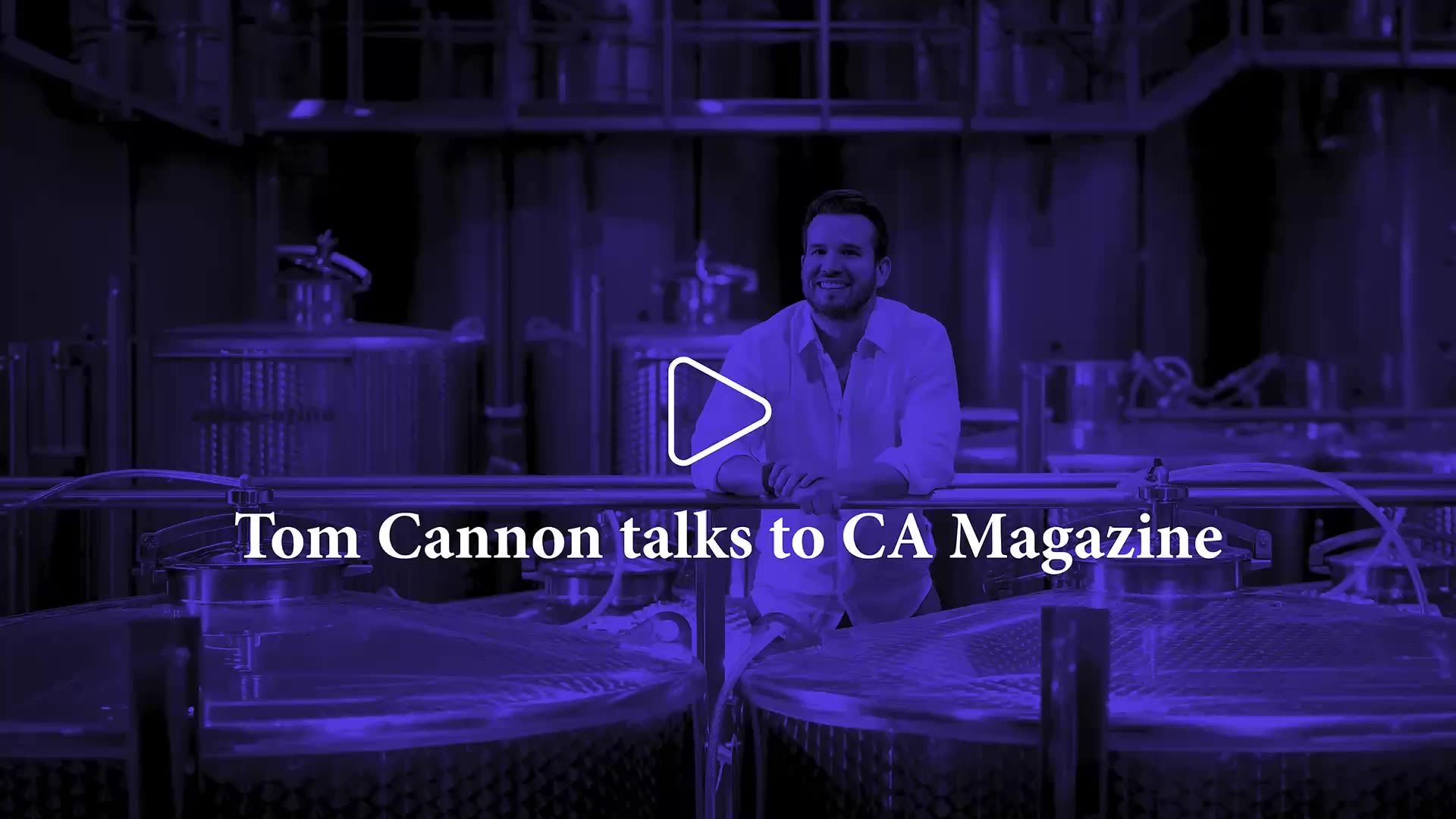
After EY, he decided to “follow the money a little bit”, moving into private equity as a “young and hungry” twenty-something. It gave him insight into the world of private equity and its portfolio companies, but “working 80 to 90-hour weeks for someone else wasn’t necessarily what I wanted,” he says. “I realised life isn’t all about money.”
What interested him most was understanding how the portfolio companies themselves operated. This led him into the earlier-stage world of venture capital, where he joined Seedrs, now known as Republic Europe, as a portfolio manager.
Working with hundreds of startups – from new businesses to companies generating millions in annual revenue and ultimately achieving successful exits – gave him “a crash course in entrepreneurship”. And, more significantly, “it gave me the itch that I potentially felt needed to be scratched”.
Wine time
The lightbulb moment came while he was working with English vineyard and winemaker Chapel Down on a fundraiser – prompting him to “go down the rabbit hole” to examine the wine market more closely.
Tom discovered a curious anomaly. Although the UK is the world’s largest importer of rosé by value, English wine growers are overwhelmingly focused on sparkling wine. This is largely because parts of southern England share similar soil and climatic conditions with the French Champagne region, making them well suited to growing the grape varieties traditionally used for sparkling wine.
Drawing on what he had learnt in venture capital, he saw an opportunity to “build the benchmark for English rosé”. He’d create a brand for modern drinks consumers that “didn’t take itself too seriously”, while still producing great quality wines. “So, I took the plunge.”
“I didn’t really appreciate it at the time, but there are things you learn throughout your CA qualification that serve you later in life”
In October 2019, Tom and his wife Elisha founded Folc, a small wine company based in south-east England. With the rising temperatures of recent years creating ideal conditions for growing grapes in areas such as Kent and Surrey, they wanted to challenge the belief that great rosé could only be made in France.
The unusual name is an Old English word meaning ‘people’, ‘pride’ or ‘tribe/family’ – and springs from Tom’s desire to bring people together around wine and remove some of the snobbery and “culture of elitism” associated with it.
They needed to test the concept before committing significant time and money, so started with a small batch of just 1,000 bottles. And not owning his own winery or vineyard, Tom adopted a model commonly used in the south of France: buying grapes from specialist growers in Kent and Hampshire and using a contract winery, Canterbury-based Defined Wine, to make the wine, before bottling, branding and selling it.
“The beauty of this model is it requires very little upfront capital,” he says. It also allowed him to invest some of his savings while continuing to work in venture capital and build the business alongside it.
Then, in March 2020, Covid hit. “Great time to start a business,” he jokes. But there was an upside: with people stuck at home, drinking, browsing on their phones and willing to try new products, Folc was able to reach customers relatively easily through direct-to-consumer channels.
Those first 1,000 bottles became an important proof of concept. With limited resources and no deep expertise in winemaking or grape growing, the couple were nevertheless able to get the product to market and get customer feedback quickly.
Scaling up
The first year was a success. Strong feedback meant more investment and an increase in production to around 3,500 bottles.
The next stage was approached with what Tom calls “accountancy structured thinking”. “If the first test had been ‘Can we build a product that consumers like?’, the second test was: ‘Can we prove that product can stand up on a global stage?’”
They entered the wine into international competitions, including the annual International Wine & Spirit Competition, against established global brands such as Minuty, Mirabeau and Whispering Angel.
The result was a silver medal. “As kids, we never celebrate second place,” says Tom, “but this was genuinely a phenomenal achievement. Even some of the best winemakers in the world still don’t achieve that.”
That gave him the confidence to “really double down and give it a go”. In July 2021, he handed in his notice and took Folc full-time. The business raised investment and scaled further.
“The beauty of this model is it requires very little upfront capital,” he says. It also allowed him to invest some of his savings while continuing to work in venture capital and build the business alongside it.
Then, in March 2020, Covid hit. “Great time to start a business,” he jokes. But there was an upside: with people stuck at home, drinking, browsing on their phones and willing to try new products, Folc was able to reach customers relatively easily through direct-to-consumer channels.
Those first 1,000 bottles became an important proof of concept. With limited resources and no deep expertise in winemaking or grape growing, the couple were nevertheless able to get the product to market and get customer feedback quickly.
Scaling up
The first year was a success. Strong feedback meant more investment and an increase in production to around 3,500 bottles.
The next stage was approached with what Tom calls “accountancy structured thinking”. “If the first test had been ‘can we build a product that consumers like?’, the second test was: ‘can we prove that product can stand up on a global stage?’”
They entered the wine into international competitions, including the annual International Wine & Spirit Competition (IWSC), against established global brands such as Minuty, Mirabeau and Whispering Angel.
The result was a silver medal. “As kids, we never celebrate second place,” says Tom, “but this was genuinely a phenomenal achievement. Even some of the best winemakers in the world still don’t achieve that.”
That gave him the confidence to “really double down and give it a go”. In July 2021, he handed in his notice and took Folc full-time. The business raised investment and scaled further.
Education
Studied economics and management at the University of Bristol
2013
Trained with EY, qualifying in 2016
2016
Joined Quest Fund Placement as Private Equity Fundraising Analyst
2017
Promoted to Associate
2018
Switched to Seedrs as Venture and Growth Investments Portfolio Associate
2019
Promoted to Portfolio Manager; founded Folc
Education
Studied economics and management at the University of Bristol
2013
Trained with EY, qualifying in 2016
2016
Joined Quest Fund Placement as Private Equity Fundraising Analyst
2017
Promoted to Associate
2018
Switched to Seedrs as Venture and Growth Investments Portfolio Associate
2019
Promoted to Portfolio Manager; founded Folc
In the pink
The last five years have seen strong growth, 120% year on year, with Folc producing around 100,000 bottles today. Of course, there have been hiccups along the way – notably, investing in a striking spirits bottle that required “the world’s most expensive cork”.
And then there was the time in 2025 when Folc hit the headlines.
"When we launched our sparkling rosé last year, we worked with agency 10 Days on a disruptive-but-tasteful ad campaign that poked fun at French champagne houses (slogans like ‘We’re not part of the Veuve clique’ and ‘None of the same old Bollie’). When a cease-and-desist letter arrived from Bollinger, we thought it could kill the business. After seeking legal advice, we decided to contact the media and turn it into a David vs. Goliath story, about how a small English brand was being bullied by a behemoth of the champagne world. We were in the national papers and on the radio. The result? A 4,000% sales increase. It could have been catastrophic, but the coverage helped pushed the business further."
There’s been great validation too. While raising capital, he found himself pitching to Frazer Thompson, the founder and CEO of Chapel Down, who has since retired. Thompson was so impressed by what they were building, he joined Folc as a non-executive director and board adviser.
“You’ll get knocked back a million times. Just keep going, one step in front of the other”
Then there are the personal victories. Tom had always imagined seeing Folc on the wine list at his local pub. This year, after Folc won the Young’s contract and was stocked in around 65 of its premium London pubs, that happened too.
But the life of an entrepreneur is not without its challenges. There are moments, naturally, when “you can’t see the wood from the trees”. Spending time with his son helps him switch off, as does CrossFit.
He is also majorly inspired by a quote from Olympic skier Eileen Gu: “You can control what you think. You can control how you think, and therefore, you can control who you are… I can literally become exactly who I want to be.”
“That really resonates with me,” he says. “If you ever find yourself in those moments of despair, remember the world isn’t going to end. And if you can control your emotions and your thinking and empower yourself to believe that you can achieve what you’ve set out to achieve, then you’ll get there.”
At the time of writing, Folc is in Q4 of its financial year, well on track to beat budget, having benefitted from a long hot summer in the south-east of England that has provided “one of the best harvests on record for English wine”.
Looking ahead, the focus is on “more bottles, more distribution and more disruptive marketing campaigns”, alongside an exciting new partnership with a sparkling wine producer.
Tom’s CA background continues to influence the way he makes decisions. As a CEO, being able to take “huge amounts of information” from customers, online channels and forecasts and distil it into something meaningful has proved invaluable, he says.
As has the best advice he’s ever received: “Just never give up. You’ll get knocked back a million times. Just keep going, one step in front of the other. One percent a day – those percentages compound, and before you know it, you’ve achieved something you can be really proud of.”
And for CAs thinking about becoming entrepreneurs, his advice is similarly straightforward: “It takes a lot of grit, persistence and resilience. If you’ve got all three in spades, then you’ll do all right.” We’ll drink to that.
Read ICAS’ step-by-step guide to starting and financing a business
In the pink
The last five years have seen strong growth, 120% year on year, with Folc producing around 100,000 bottles today. Of course, there have been hiccups along the way – notably, investing in a striking spirits bottle that required “the world’s most expensive cork”.
And then there was the time in 2025 when Folc hit the headlines.
"When we launched our sparkling rosé last year, we worked with agency 10 Days on a disruptive-but-tasteful ad campaign that poked fun at French champagne houses (slogans like ‘We’re not part of the Veuve clique’ and ‘None of the same old Bollie’). When a cease-and-desist letter arrived from Bollinger, we thought it could kill the business. After seeking legal advice, we decided to contact the media and turn it into a David vs. Goliath story, about how a small English brand was being bullied by a behemoth of the champagne world. We were in the national papers and on the radio. The result? A 4,000% sales increase. It could have been catastrophic, but the coverage helped pushed the business further."
There’s been great validation too. While raising capital, he found himself pitching to Frazer Thompson, the founder and CEO of Chapel Down, who has since retired. Thompson was so impressed by what they were building, he joined Folc as a non-executive director and board adviser.
“You’ll get knocked back a million times. Just keep going, one step in front of the other”
Then there are the personal victories. Tom had always imagined seeing Folc on the wine list at his local pub. This year, after Folc won the Young’s contract and was stocked in around 65 of its premium London pubs, that happened too.
But the life of an entrepreneur is not without its challenges. There are moments, naturally, when “you can’t see the wood from the trees”. Spending time with his son helps him switch off, as does CrossFit.
He is also majorly inspired by a quote from Olympic skier Eileen Gu: “You can control what you think. You can control how you think, and therefore, you can control who you are… I can literally become exactly who I want to be.”
“That really resonates with me,” he says. “If you ever find yourself in those moments of despair, remember the world isn’t going to end. And if you can control your emotions and your thinking and empower yourself to believe that you can achieve what you’ve set out to achieve, then you’ll get there.”
At the time of writing, Folc is in Q4 of its financial year, well on track to beat budget, having benefitted from a long hot summer in the south-east of England that has provided “one of the best harvests on record for English wine”.
Looking ahead, the focus is on “more bottles, more distribution and more disruptive marketing campaigns”, alongside an exciting new partnership with a sparkling wine producer.
Tom’s CA background continues to influence the way he makes decisions. As a CEO, being able to take “huge amounts of information” from customers, online channels and forecasts and distil it into something meaningful has proved invaluable, he says.
As has the best advice he’s ever received: “Just never give up. You’ll get knocked back a million times. Just keep going, one step in front of the other. One percent a day – those percentages compound, and before you know it, you’ve achieved something you can be really proud of.”
And for CAs thinking about becoming entrepreneurs, his advice is similarly straightforward: “It takes a lot of grit, persistence and resilience. If you’ve got all three in spades, then you’ll do all right.” We’ll drink to that.
Read ICAS’ step-by-step guide to starting and financing a business
 Built with Shorthand