


‘We need a shared economy and that requires shared practice’

‘We need a shared economy and that requires shared practice’
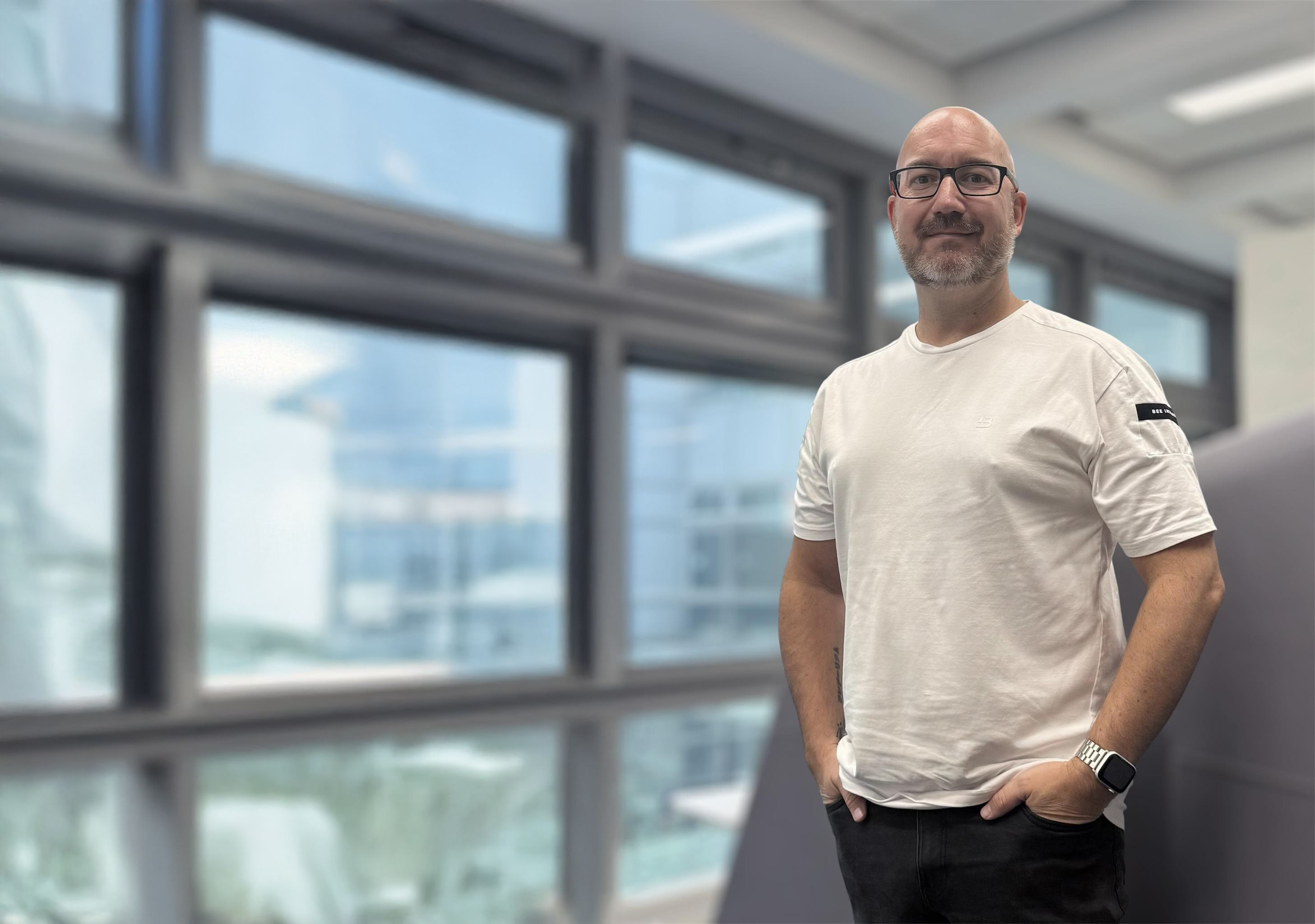
As Head of the Scottish Digital Academy, Lee Dunn is tasked with fostering the enthusiastic embrace of new technologies in the public and third sectors. The former Senior Operations Manager, Education, at ICAS outlines why digital transformation needs innovation, collaboration and accountability
Words: Cris Andrews


As Head of the Scottish Digital Academy, Lee Dunn is tasked with fostering the enthusiastic embrace of new technologies in the public and third sectors. The former Senior Operations Manager, Education, at ICAS outlines why digital transformation needs innovation, collaboration and accountability
Words: Cris Andrew
In January 2025, the Scottish government signalled its intent to revise its 2021 digital strategy to reflect emerging technologies, changes in service demand and public sector budget pressures in the aftermath of Covid, the war in Ukraine and surging global commodity prices. One of the key organisations trying to deliver that strategy is the Scottish Digital Academy (SDA), effectively the government’s centre of excellence for digital capability.
The SDA Head is Lee Dunn, the former ICAS Senior Operations Manager in education and digital learning. Dunn leads the academy’s strategy and operational delivery of digital skills across the public and third sector. He also manages 1,500 digital and technology professionals working for the government and various agencies. “It’s our job to make sure organisations have the right skillset to take forward digital transformation,” he says.
New technology is changing how we live and work. As its innovations – instant communication, remote collaboration, automation and global connectivity – continue to spread, developing strong digital skills becomes increasingly important. And, while these developments are relevant to CAs everywhere, Dunn believes Scotland is in a particularly good place to lead. “We already provide effective and cost-efficient public services and there’s private sector innovation,” he says. “Gaming, space, net zero – these industries are expanding and attracting digital talent to Scotland.”
“Instil a culture where there’s autonomy, accountability and shared responsibility. If leadership exists at all levels, anybody within an organisation can come forward with a suggestion rather than needing permission”
“It’s important that industry and the public sector advance in parallel,” Dunn says, and this, he believes, puts CAs in the perfect place to make a difference. “A CA with the financial acumen to navigate the system and the business knowledge of how that system operates is in a good place to advise on strategic overview and operational delivery,” he says.
An April 2025 report from Chartered Accountants Worldwide (CAW) and Ipsos UK suggested that CAs can play a significant role in digital transformation. But, the report concluded, if they’re to capitalise on the opportunities, dedicated upskilling is required.
To this end, Dunn advises CAs to carve out the space and time to allow themselves to be innovative. “It’s a very busy world, and where we have a culture of business, we need space for our own professional learning, in this case about what the digital world looks like,” he says. “If you can tie this learning into business objectives and get business support, amazing. But if not, don’t let that stop you. It doesn’t have to be formal learning: blogs, YouTubes, literature work… take five minutes or five hours, whatever you can manage.”
Leap of faith
While digitalisation is clearly a necessity for most, its benefits are not always known in advance, Dunn concedes: “Sometimes there’s an evidence trail, but in the digital space you often have an idea or general sense of direction, and it’s a leap of faith. So have the professional courage to be in that space.”
The 2025 CAW/Ipsos report also stressed the need for proactive leadership to enable CAs to contribute. Dunn agrees that leaders are in a good position to drive digital transformation, so long as they look to empower the people who work for them. “Instil a culture where there’s autonomy, accountability and shared responsibility,” he advises. “If leadership exists at all levels, anybody within an organisation can come forward with a suggestion rather than needing permission.”
Dunn also suggests leaders investing in digital transformation should look for the quick wins – and to accept when something isn’t working and deal with it swiftly. This is particularly important when operating in a fiscally challenging environment, he argues. He also believes that while digital expertise is not essential to lead the transformation process, you should at least know what success looks like and be able to challenge and ask the right questions.


Lee Dunn addresses the Government Transformation 100 Awards in London in 2024
Lee Dunn addresses the Government Transformation 100 Awards in London in 2024
During his time at ICAS, between 2017 and 2019, Dunn was involved in modernising its approach to digital capabilities and online learning. “We were restructuring, introducing new systems and platforms,” he says. “When I came into the post there was excellent work happening, highly effective, efficient, but it wasn’t digitally based. A lot of paperwork was still used – traditional systems. ICAS was starting to think about how it could bring in more resilient services and systems. A lot of the existing ones were bespoke, they worked, but making a change to them wasn’t effective. They were legacy – and more advanced systems were available.
“Did the new systems all work perfectly to begin with? No, but that’s not unusual. We went through that process of incremental implementation and started to make progress. I came out of that post just before the pandemic hit. I suspect that ICAS was in a better position to respond to the pandemic with the new systems.”
After ICAS, Dunn moved to Education Scotland as Lead Specialist in professional learning. He has also lectured on education and technology at Glasgow University and has been a civil servant since 2018, heading the SDA since April 2021. And he has a second role with the Scottish government, Head of the Resilience Room. “When there’s a national emergency such as a cyber-attack or severe weather, it’s my role to help coordinate the government response, which could mean liaison with the UK government Cabinet Office Briefing Room, or require clear communication with several agencies,” he says.
This wide variety of roles and responsibilities puts Dunn in a great position to offer valuable insight into change leadership for digital transformation. “Get people’s buy-in, surround yourself with people who are professionally courageous, who want to be innovative and challenge the norm, then give them the freedom to experiment,” he advises, adding that it’s important to think about future potential when considering emerging technologies, such as AI and quantum computing. The latter, Dunn believes, will have a massive impact on the financial sector, as it will create faster processing, fundamentally changing how the sector operates.
“Take a step back and think,” says Dunn. “What are the capabilities that we’ll have in the future that we don’t have now, and vice versa. That might not just be adapting existing policies and processes, but also changing your existing ones to better utilise the new capabilities.”
In July 2020, Dunn took up yet another role as an Inclusive Policy Lab (IPL) expert and moderator with Unesco. “The IPL is a collective of experts from NGOs, academia and other places that looks at transformation across governments around the world,” he says. “We focus on wider transformation, but digital always tends to be there somewhere. What differs is how far the specific country wants to push digital technology and what area they want to focus on – say, services.”
Unesco, like many other UN agencies, promotes the use of tech to help pursue the UN sustainable development goals relating to poverty, hunger, energy shortage, the climate crisis and 13 other key areas. The job of its IPL forums and many other UN groups is to stimulate transformation in parts of the world where it wouldn’t ordinarily take place – for example, where industry or expertise is lacking, or the country is an unattractive investment proposition for big corporations.
“If a government is looking to transform digital services, my team looks at the academic research, the strategies in place and existing government policies,” Dunn says. “When something needs to happen, we can connect the right group or person into that space to effect change. That could be local or regional experts, or based on sector – such as academics from different countries. It could be people already inside the forum, but also with expertise from outside.
In January 2025, the Scottish government signalled its intent to revise its 2021 digital strategy to reflect emerging technologies, changes in service demand and public sector budget pressures in the aftermath of Covid, the war in Ukraine and surging global commodity prices. One of the key organisations trying to deliver that strategy is the Scottish Digital Academy (SDA), effectively the government’s centre of excellence for digital capability.
The SDA Head is Lee Dunn, the former ICAS Senior Operations Manager in education and digital learning. Dunn leads the academy’s strategy and operational delivery of digital skills across the public and third sector. He also manages 1,500 digital and technology professionals working for the government and various agencies. “It’s our job to make sure organisations have the right skillset to take forward digital transformation,” he says.
New technology is changing how we live and work. As its innovations – instant communication, remote collaboration, automation and global connectivity – continue to spread, developing strong digital skills becomes increasingly important. And, while these developments are relevant to CAs everywhere, Dunn believes Scotland is in a particularly good place to lead. “We already provide effective and cost-efficient public services and there’s private sector innovation,” he says. “Gaming, space, net zero – these industries are expanding and attracting digital talent to Scotland.”
“Instil a culture where there’s autonomy, accountability and shared responsibility. If leadership exists at all levels, anybody within an organisation can come forward with a suggestion rather than needing permission”
“It’s important that industry and the public sector advance in parallel,” Dunn says, and this, he believes, puts CAs in the perfect place to make a difference. “A CA with the financial acumen to navigate the system and the business knowledge of how that system operates is in a good place to advise on strategic overview and operational delivery,” he says.
An April 2025 report from Chartered Accountants Worldwide (CAW) and Ipsos UK suggested that CAs can play a significant role in digital transformation. But, the report concluded, if they’re to capitalise on the opportunities, dedicated upskilling is required.
To this end, Dunn advises CAs to carve out the space and time to allow themselves to be innovative. “It’s a very busy world, and where we have a culture of business, we need space for our own professional learning, in this case about what the digital world looks like,” he says. “If you can tie this learning into business objectives and get business support, amazing. But if not, don’t let that stop you. It doesn’t have to be formal learning: blogs, YouTubes, literature work… take five minutes or five hours, whatever you can manage.”
Leap of faith
While digitalisation is clearly a necessity for most, its benefits are not always known in advance, Dunn concedes: “Sometimes there’s an evidence trail, but in the digital space you often have an idea or general sense of direction, and it’s a leap of faith. So have the professional courage to be in that space.”
The 2025 CAW/Ipsos report also stressed the need for proactive leadership to enable CAs to contribute. Dunn agrees that leaders are in a good position to drive digital transformation, so long as they look to empower the people who work for them. “Instil a culture where there’s autonomy, accountability and shared responsibility,” he advises. “If leadership exists at all levels, anybody within an organisation can come forward with a suggestion rather than needing permission.”
Dunn also suggests leaders investing in digital transformation should look for the quick wins – and to accept when something isn’t working and deal with it swiftly. This is particularly important when operating in a fiscally challenging environment, he argues. He also believes that while digital expertise is not essential to lead the transformation process, you should at least know what success looks like and be able to challenge and ask the right questions.
Lee Dunn addresses the Government Transformation 100 Awards in London in 2024
Lee Dunn addresses the Government Transformation 100 Awards in London in 2024
During his time at ICAS, between 2017 and 2019, Dunn was involved in modernising its approach to digital capabilities and online learning. “We were restructuring, introducing new systems and platforms,” he says. “When I came into the post there was excellent work happening, highly effective, efficient, but it wasn’t digitally based. A lot of paperwork was still used – traditional systems. ICAS was starting to think about how it could bring in more resilient services and systems. A lot of the existing ones were bespoke, they worked, but making a change to them wasn’t effective. They were legacy – and more advanced systems were available.
“Did the new systems all work perfectly to begin with? No, but that’s not unusual. We went through that process of incremental implementation and started to make progress. I came out of that post just before the pandemic hit. I suspect that ICAS was in a better position to respond to the pandemic with the new systems.”
After ICAS, Dunn moved to Education Scotland as Lead Specialist in professional learning. He has also lectured on education and technology at Glasgow University and has been a civil servant since 2018, heading the SDA since April 2021. And he has a second role with the Scottish government, Head of the Resilience Room. “When there’s a national emergency such as a cyber-attack or severe weather, it’s my role to help coordinate the government response, which could mean liaison with the UK government Cabinet Office Briefing Room, or require clear communication with several agencies,” he says.
This wide variety of roles and responsibilities puts Dunn in a great position to offer valuable insight into change leadership for digital transformation. “Get people’s buy-in, surround yourself with people who are professionally courageous, who want to be innovative and challenge the norm, then give them the freedom to experiment,” he advises, adding that it’s important to think about future potential when considering emerging technologies, such as AI and quantum computing. The latter, Dunn believes, will have a massive impact on the financial sector, as it will create faster processing, fundamentally changing how the sector operates.
“Take a step back and think,” says Dunn. “What are the capabilities that we’ll have in the future that we don’t have now, and vice versa. That might not just be adapting existing policies and processes, but also changing your existing ones to better utilise the new capabilities.”
In July 2020, Dunn took up yet another role as an Inclusive Policy Lab (IPL) expert and moderator with Unesco. “The IPL is a collective of experts from NGOs, academia and other places that looks at transformation across governments around the world,” he says. “We focus on wider transformation, but digital always tends to be there somewhere. What differs is how far the specific country wants to push digital technology and what area they want to focus on – say, services.”
Unesco, like many other UN agencies, promotes the use of tech to help pursue the UN sustainable development goals relating to poverty, hunger, energy shortage, the climate crisis and 13 other key areas. The job of its IPL forums and many other UN groups is to stimulate transformation in parts of the world where it wouldn’t ordinarily take place – for example, where industry or expertise is lacking, or the country is an unattractive investment proposition for big corporations.
“If a government is looking to transform digital services, my team looks at the academic research, the strategies in place and existing government policies,” Dunn says. “When something needs to happen, we can connect the right group or person into that space to effect change. That could be local or regional experts, or based on sector – such as academics from different countries. It could be people already inside the forum, but also with expertise from outside.


M&S and other corporate victims of cybersecurity breaches
M&S and other corporate victims of cybersecurity breaches








M&S and other corporate victims of cybersecurity breaches
M&S and other corporate victims of cybersecurity breaches
“Diverse expertise is important because we look at the wider ecosystem of how transformation happens, say, how voluntary organisations and charities become partners with governments. I’m not an expert on NGOs, I know what they are and do, but others in the forum have that expertise.”
Dunn’s role in the forum is to coordinate, ask the right questions and share information about UN projects. “If someone raises a concern to the IPL through Unesco, then Unesco will connect with experts; that could be me, then I respond,” he says. “The enquiry could be around the ethical use of technology, particularly AI, making citizen experience equitable so children as well as adults are using digital technologies. And diversity, although that can be tricky as ideas about diversity vary from one nation to the next.”
Another area that the Unesco policy labs forum covers is cybersecurity. Helping organisations become resilient to harmful cyber-attack is also an important area of focus for the SDA, and a capability that Dunn believes is crucial to the success of digital transformation everywhere.
“There’s a massive focus on prevention in cybersecurity and we do need that. But we also need an equal focus on the ‘what if?’ scenarios”
“Cyber-attacks are increasingly significant to the UK economy,” Dunn says. “It only takes one attack, and it doesn’t have to be the main organisation – it could be a supplier, large or small. If they’re attacked, it can take down the whole system.”
Dunn explains that contingency planning is crucial for an organisation’s cyber-resilience. “There’s a massive focus on prevention and we do need that,” he says. “But we also need an equal focus on the ‘what if?’ scenarios. We can prevent as much as we want, but if we do suffer an attack, if systems are compromised, does everybody in the organisation know what to do, and how to protect themselves and customers quickly?
“A CEO needs to know what good cybersecurity should look like. That way, when speaking to teams they understand what’s being said, even if they don’t understand all the nuts and bolts.”
What is needed now, and next, to take maximum advantage of the opportunities the advances in tech bring? For Scotland it’s about attracting more digital talent, Dunn believes: “We know there’s a skill shortage, we don’t have an infinite amount of people we can call on. Growing sectors like space will attract talent, and if it comes in from outside the country, great. But some of that talent might just move from the public sector or from an organisation elsewhere in Scotland – that just shifts the problem around.”
To counter the skills shortage, Dunn urges more investment in digital capacity in schools, colleges and universities, but also within workplaces. “It’s important to have a digitally focused element of any CA training curriculum,” he says “CAs don’t need to be experts but do need knowledge and a level of familiarity with the subject.”
In the longer term, Dunn says cooperation is the key to successful digital transformation: “Rather than have 20 organisations doing their own thing, bring them together, identify who is best to lead on a particular area, and have the other 19 organisations support. Then everyone benefits. Do it once and then scale it up. We need a shared economy and that requires shared practice.”
digitalacademy.gov.scot
unesco.org/inclusivepolicylab


Find more resources on AI and digital
“Diverse expertise is important because we look at the wider ecosystem of how transformation happens, say, how voluntary organisations and charities become partners with governments. I’m not an expert on NGOs, I know what they are and do, but others in the forum have that expertise.”
Dunn’s role in the forum is to coordinate, ask the right questions and share information about UN projects. “If someone raises a concern to the IPL through Unesco, then Unesco will connect with experts; that could be me, then I respond,” he says. “The enquiry could be around the ethical use of technology, particularly AI, making citizen experience equitable so children as well as adults are using digital technologies. And diversity, although that can be tricky as ideas about diversity vary from one nation to the next.”
Another area that the Unesco policy labs forum covers is cybersecurity. Helping organisations become resilient to harmful cyber-attack is also an important area of focus for the SDA, and a capability that Dunn believes is crucial to the success of digital transformation everywhere.
“There’s a massive focus on prevention in cybersecurity and we do need that. But we also need an equal focus on the ‘what if?’ scenarios”
“Cyber-attacks are increasingly significant to the UK economy,” Dunn says. “It only takes one attack, and it doesn’t have to be the main organisation – it could be a supplier, large or small. If they’re attacked, it can take down the whole system.”
Dunn explains that contingency planning is crucial for an organisation’s cyber-resilience. “There’s a massive focus on prevention and we do need that,” he says. “But we also need an equal focus on the ‘what if?’ scenarios. We can prevent as much as we want, but if we do suffer an attack, if systems are compromised, does everybody in the organisation know what to do, and how to protect themselves and customers quickly?
“A CEO needs to know what good cybersecurity should look like. That way, when speaking to teams they understand what’s being said, even if they don’t understand all the nuts and bolts.”
What is needed now, and next, to take maximum advantage of the opportunities the advances in tech bring? For Scotland it’s about attracting more digital talent, Dunn believes: “We know there’s a skill shortage, we don’t have an infinite amount of people we can call on. Growing sectors like space will attract talent, and if it comes in from outside the country, great. But some of that talent might just move from the public sector or from an organisation elsewhere in Scotland – that just shifts the problem around.”
To counter the skills shortage, Dunn urges more investment in digital capacity in schools, colleges and universities, but also within workplaces. “It’s important to have a digitally focused element of any CA training curriculum,” he says “CAs don’t need to be experts but do need knowledge and a level of familiarity with the subject.”
In the longer term, Dunn says cooperation is the key to successful digital transformation: “Rather than have 20 organisations doing their own thing, bring them together, identify who is best to lead on a particular area, and have the other 19 organisations support. Then everyone benefits. Do it once and then scale it up. We need a shared economy and that requires shared practice.”
digitalacademy.gov.scot
unesco.org/inclusivepolicylab
Find more resources on AI and digital


 Built with Shorthand