


Breaking
the silence
on the 3M


Breaking
the silence
on the 3M
As part of the Shaping the Profession research project, ICAS has commissioned a report on the impact of menstruation, menopause and miscarriage on women’s careers in accountancy. The investigation reveals a damaging collective reluctance to speak openly
“An amazing and timely piece of research, hopefully encouraging some meaningful workplace discussions.”
“A really important piece of work — thank you to everyone involved in bringing these experiences into the spotlight.”
“Thanks for breaking the taboo on these issues, and well done to the research team for identifying some actionable steps we can take to address these in practice!”
The above is just a flavour of the response to the publication of a new ICAS report, Exploring the lived experience of women in accounting around menstruation, menopause and miscarriage (3M) in the workplace, written by Eleni Chatzivgeri and Rania Kamla, both of the University of Edinburgh, Louise Crawford of Newcastle University and Qi Li of Heriot-Watt University.
This is the first time an accountancy body has produced a report on the ‘3M’ (menstruation, menopause and miscarriage) and its findings are relevant to every sector and industry that employs women. Drawing on her own experiences, Sarah Chisnall, Director of Public Affairs at ICAS, says: “For me and many women beginning our careers in the early 1990s the workplace looked very different. Women often faced enormous challenges, from rigid dress codes to overtly male-dominated environments. I vividly recall being asked when I worked for a local council to go home and change out of a trouser suit because it was considered ‘unsuitable’ for work.
“While recruitment to chartered accountancy
bodies is improving for women, retention and progression within the profession still have
some way to go”
“In most offices, you would simply never dream of mentioning your period or how menopause was making you feel, and those who suffered the tragedy of losing a pregnancy were expected to soldier on as if nothing had happened. These experiences inspired my MSc dissertation on the experiences of women working in the public sector, where I interviewed many women about pay inequality and barriers to progression. I’m now at the other end of my career journey and can find some working environments challenging, especially when a hot flush hits!
“Thankfully, we’ve come a long way since then. But even now, conversations about women’s health at work often stop at pregnancy and motherhood. The 3M remains largely invisible in public debate and workplace policy. This silence matters: when these realities are ignored, women’s wellbeing suffers, and careers can be impacted.
“The findings are stark. A continuing culture of silence and stigma, and a lack of structural support for women navigating these experiences. These findings are drawn from a combination of the interviews and analysis of what’s already out there in research and company policies. They don’t necessarily reflect what happens at ICAS or ICAS policy.”
“An amazing and timely piece of research, hopefully encouraging some meaningful workplace discussions.”
“A really important piece of work — thank you to everyone involved in bringing these experiences into the spotlight.”
“Thanks for breaking the taboo on these issues, and well done to the research team for identifying some actionable steps we can take to address these in practice!”
The above is just a flavour of the response to the publication of a new ICAS report, Exploring the lived experience of women in accounting around menstruation, menopause and miscarriage (3M) in the workplace, written by Eleni Chatzivgeri and Rania Kamla, both of the University of Edinburgh, Louise Crawford of Newcastle University and Qi Li of Heriot-Watt University.
This is the first time an accountancy body has produced a report on the ‘3M’ (menstruation, menopause and miscarriage) and its findings are relevant to every sector and industry that employs women. Drawing on her own experiences, Sarah Chisnall, Director of Public Affairs at ICAS, says: “For me and many women beginning our careers in the early 1990s the workplace looked very different. Women often faced enormous challenges, from rigid dress codes to overtly male-dominated environments. I vividly recall being asked when I worked for a local council to go home and change out of a trouser suit because it was considered ‘unsuitable’ for work.
“While recruitment to chartered accountancy
bodies is improving for women, retention and progression within the profession still have
some way to go”
“In most offices, you would simply never dream of mentioning your period or how menopause was making you feel, and those who suffered the tragedy of losing a pregnancy were expected to soldier on as if nothing had happened. These experiences inspired my MSc dissertation on the experiences of women working in the public sector, where I interviewed many women about pay inequality and barriers to progression. I’m now at the other end of my career journey and can find some working environments challenging, especially when a hot flush hits!
“Thankfully, we’ve come a long way since then. But even now, conversations about women’s health at work often stop at pregnancy and motherhood. The 3M remains largely invisible in public debate and workplace policy. This silence matters: when these realities are ignored, women’s wellbeing suffers, and careers can be impacted.
“The findings are stark. A continuing culture of silence and stigma, and a lack of structural support for women navigating these experiences. These findings are drawn from a combination of the interviews and analysis of what’s already out there in research and company policies. They don’t necessarily reflect what happens at ICAS or ICAS policy.”


Background
A quick look at the history of professional body membership in the UK gives us insight into the marginalisation of women’s voices in the workplace, and its impact on their career opportunities. Until the 1919 Sex Disqualification Act, UK professional accountancy bodies had men-only memberships. Despite the passage of the Act, by 1931 fewer than 1% of all UK chartered accountants were women.
By contrast, in 2023, women constituted 56% of trainees across the six UK chartered accountancy bodies, plus the Association of International Accountants. Nevertheless, they represented only 40% of the combined membership. Women constitute 45–49% of the Big Four workforce in the UK, but only 24–28% are in partnership positions.
These statistics indicate that while recruitment to chartered accountancy bodies is improving for women, retention and progression within the profession still have some way to go. Indeed, the academic literature supports this view, confirming the persistence of the glass ceiling and gender pay gap.
Key findings
Stigma and silence
There is considerable stigma and a pervasive culture of silence surrounding discussions of the 3M in the workplace. Women are often reluctant to address these issues due to fears of appearing weak or unprofessional, which compromises their ability to effectively manage their health alongside their professional responsibilities.


................................................................
Role of leadership
Women in accounting are still largely working in teams managed by men. Leadership plays a crucial role in promoting a culture of trust, either addressing or perpetuating the stigma around the 3M. Supportive leadership can significantly improve workplace experiences for affected women, yet many leaders lack the awareness or commitment to provide necessary support.


................................................................
Workplace physical environment
Issues like inadequate personal care breaks, lack of privacy in toilets and unsuitable office layouts, such as open-plan settings, exacerbate discomfort and stress. Additionally, inflexible environmental conditions such as temperature and noise disproportionately affect our interviewee population.

................................................................
Flexibility and hybrid work
Inflexible work conditions, such as strict office-based requirements, often exacerbate challenges associated with the 3M. The lack of remote working options restricts women’s ability to adjust their environments on challenging days, increasing physical discomfort and making it difficult to balance personal wellbeing with professional responsibilities.

................................................................
Discrepancies in experiences based
on seniority and ethnicity
Junior/less experienced women generally have less control over their working conditions than their senior and more experienced counterparts, which hinders their ability to manage the 3M effectively. Additionally, ethnic minority women experience additional stigma and are even more reluctant to discuss these issues, fearing further marginalisation. This issue is compounded by a widespread lack of understanding about the 3M symptoms and their varied impacts, which differ between individuals. The result is a workplace environment that makes it challenging for women to seek and receive the necessary support, often leaving them feeling isolated and unsupported.


................................................................
Lived experiences
“I think in my 15 years that I spent in the corporate world, working as an accountant, I never had a discussion around my period. And no other woman ever had a discussion about their period as well.”
Victoria
“You’re worried people will see it as diminishing your ability at work. When you do feel that, you want to keep that quiet because you want people to see this image of you who is at full capacity all the time.”
Ivy
“It’s literally never stopping for women and complexities/challenges around 3M, fourth M [maternity and motherhood] and choice on when/if to have children and impact on demands and body/brain changes after that reproductive and gynaecological journey and hormonal journey that women are going through.”
Sarah
................................................................
Maternity: the fourth M
Women often perceive a risk to their career progression based on the experiences of their colleagues. For example, one participant decided to keep her attempts to conceive private, out of concern that it could hinder her prospects for a promotion, after learning about two friends who had miscarriages.
“So those examples I gave you of two of my friends having miscarriages... and they couldn’t even say that they had a miscarriage. If anyone knows I’m trying to get pregnant [again] I just wouldn’t even be on a promotion track.”
Imogen

................................................................
Key findings
Stigma and silence
There is considerable stigma and a pervasive culture of silence surrounding discussions of the 3M in the workplace. Women are often reluctant to address these issues due to fears of appearing weak or unprofessional, which compromises their ability to effectively manage their health alongside their professional responsibilities.
................................................................
Role of leadership
Women in accounting are still largely working in teams managed by men. Leadership plays a crucial role in promoting a culture of trust, either addressing or perpetuating the stigma around the 3M. Supportive leadership can significantly improve workplace experiences for affected women, yet many leaders lack the awareness or commitment to provide necessary support.
................................................................
Workplace physical environment
Issues like inadequate personal care breaks, lack of privacy in toilets and unsuitable office layouts, such as open-plan settings, exacerbate discomfort and stress. Additionally, inflexible environmental conditions such as temperature and noise disproportionately affect our interviewee population.
................................................................
Flexibility and hybrid work
Inflexible work conditions, such as strict office-based requirements, often exacerbate challenges associated with the 3M. The lack of remote working options restricts women’s ability to adjust their environments on challenging days, increasing physical discomfort and making it difficult to balance personal wellbeing with professional responsibilities.
................................................................
Discrepancies in experiences based on seniority and ethnicity
Junior/less experienced women generally have less control over their working conditions than their senior and more experienced counterparts, which hinders their ability to manage the 3M effectively. Additionally, ethnic minority women experience additional stigma and are even more reluctant to discuss these issues, fearing further marginalisation. This issue is compounded by a widespread lack of understanding about the 3M symptoms and their varied impacts, which differ between individuals. The result is a workplace environment that makes it challenging for women to seek and receive the necessary support, often leaving them feeling isolated and unsupported.
................................................................
Lived experiences
“I think in my 15 years that I spent in the corporate world, working as an accountant, I never had a discussion around my period. And no other woman ever had a discussion about their period as well.”
Victoria
“You’re worried people will see it as diminishing your ability at work. When you do feel that, you want to keep that quiet because you want people to see this image of you who is at full capacity all the time.”
Ivy
“It’s literally never stopping for women and complexities/challenges around 3M, fourth M [maternity and motherhood] and choice on when/if to have children and impact on demands and body/brain changes after that reproductive and gynaecological journey and hormonal journey that women are going through.”
Sarah
................................................................
Maternity: the fourth M
Women often perceive a risk to their career progression based on the experiences of their colleagues. For example, one participant decided to keep her attempts to conceive private, out of concern that it could hinder her prospects for a promotion, after learning about two friends who had miscarriages.
“So those examples I gave you of two of my friends having miscarriages... and they couldn’t even say that they had a miscarriage. If anyone knows I’m trying to get pregnant [again] I just wouldn’t even be on a promotion track.”
Imogen
................................................................
Recommendations
Leadership
Leaders should raise awareness, encourage men’s allyship and foster open conversations. Increasing gender and ethnic diversity in leadership, providing visible role models and offering inclusive leadership training will help further.
Organisations
Organisations should adjust career progression criteria to value people management, establish mentorship programmes, normalise flexible working and improve physical spaces for privacy and comfort.
Professional bodies
Professional bodies should integrate women’s health and wellbeing and the 3M into professional development, support career returners and extend mentoring beyond large firms. They should also raise awareness in education and advocate stronger inclusion of the 3M in equality initiatives.
Individuals
On an individual level, women can seek mentorship, build networks, share experiences to break stigma and prioritise self-care and support when needed.
What ICAS is doing
We have already begun to offer targeted support and to create spaces, such as the CA Women’s Network, for open discussion around the 3M themes through its wellbeing and inclusion work.
This includes webinars and network events focused on women’s health and career experiences, alongside wellbeing initiatives such as access to 24/7 counselling. We also continue to promote the CAW gender equality toolkit, developed to help employers play a significant role in shaping inclusive workplace cultures where all people, regardless of background, can thrive. These ongoing programmes will continue to evolve in response to member feedback and insights from the 3M report.
This research is not just about identifying problems – it’s about shaping solutions. By breaking the silence around the 3M, we can create workplaces where women feel supported, valued and able to thrive.
Methodology
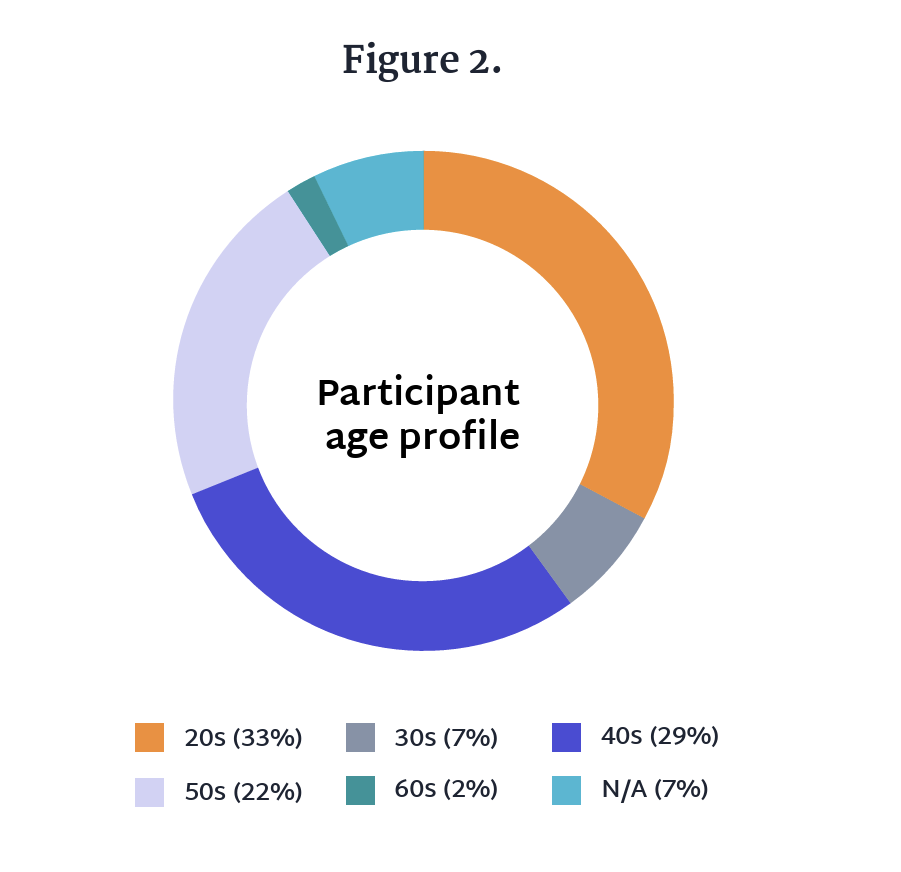
Between August to December 2024 we interviewed 42 women, all of whom are chartered accountants or in training, aged 20–60-something. Interviews ranged from 38 to 107 minutes and were recorded, transcribed and anonymised.
The research team also reviewed the publicly available reports, websites and policies of 10 organisations operating in the accounting profession to see what policies they had in place on the 3M. The selected organisations comprised the Big Four, two challenger firms, two small professional practices and two professional bodies. The team also reviewed the most recent Big Four transparency reports and those of two challenger firms, where we expected to find disclosures about people, values and attitudes as required by the Audit Firm Governance Code. Finally, they reviewed FRC pronouncements relevant to quality management and firm culture. The research team also did an extensive review of academic accountancy literature.



Read the 3M report in full
 Built with Shorthand