
THE
ACCOUNT
The latest in finance and business


THE
ACCOUNT
The latest in finance and business


Ghosts in the machine
The covering letter for a job application has traditionally been a good way for an employer to separate the wheat from the chaff, a shortcut through which to glean whether a candidate is worth bringing in for an interview.
Increasingly, however, candidates are relying on AI to write their covering letter. This may be viewed as a necessity by those making multiple job applications, but it also makes the employer’s task of hiring the right person harder.
If every covering letter is equally good, the process becomes less meritocratic. A recent study by Princeton revealed that when candidates use AI for covering letters it leads to a 19% drop in companies hiring the most capable candidates, while the least capable get a 14% boost to their chance of landing the job.
On the other side of the employment fence, AI can churn job specs so quickly, it has contributed to the rise of ‘ghost ads’. These are advertisements for jobs that don’t really exist, but are often used by companies to build talent pools, measure the demand for a specific role or simply give the impression of a company enjoying growth.
So we now have this vicious circle of AI producing covering letters for non-existent jobs created with AI tools.




Ghosts in the machine
The covering letter for a job application has traditionally been a good way for an employer to separate the wheat from the chaff, a shortcut through which to glean whether a candidate is worth bringing in for an interview.
Increasingly, however, candidates are relying on AI to write their covering letter. This may be viewed as a necessity by those making multiple job applications, but it also makes the employer’s task of hiring the right person harder.
If every covering letter is equally good, the process becomes less meritocratic. A recent study by Princeton revealed that when candidates use AI for covering letters it leads to a 19% drop in companies hiring the most capable candidates, while the least capable get a 14% boost to their chance of landing the job.
On the other side of the employment fence, AI can churn job specs so quickly, it has contributed to the rise of ‘ghost ads’. These are advertisements for jobs that don’t really exist, but are often used by companies to build talent pools, measure the demand for a specific role or simply give the impression of a company enjoying growth.
So we now have this vicious circle of AI producing covering letters for non-existent jobs created with AI tools.

Get real
Last month, Companies House began its 12-month phase-in for identity verification. This means that anyone who becomes a company director or person with significant control (PSC) will need to formally verify their identity.
It is hoped this change will provide more assurance about exactly who is setting up, running, owning and controlling companies in the UK.
“Identity verification will make it harder for people to set up companies or appoint directors using fake or stolen identities,” says Companies House. “It will make it easier to expose disqualified directors, and link multiple directorships to one person, helping to identify criminal networks.
“Identity verification will also help Companies House take enforcement action as they will know who is really behind a company.”
Individuals can verify their identity in two ways:
- directly with Companies House through the gov.uk One Login
- through an authorised corporate service provider
The former is free. It can usually be completed in minutes using existing forms of ID, such as a passport or driving licence, or by answering security questions.
Directors and PSCs will need to provide a statement with their personal code confirming they have successfully verified their identity for each company role they hold. Statements for existing directors must be submitted with the company’s confirmation statement.



Get real
Last month, Companies House began its 12-month phase-in for identity verification. This means that anyone who becomes a company director or person with significant control (PSC) will need to formally verify their identity.
It is hoped this change will provide more assurance about exactly who is setting up, running, owning and controlling companies in the UK.
“Identity verification will make it harder for people to set up companies or appoint directors using fake or stolen identities,” says Companies House. “It will make it easier to expose disqualified directors, and link multiple directorships to one person, helping to identify criminal networks.
“Identity verification will also help Companies House take enforcement action as they will know who is really behind a company.”
Individuals can verify their identity in two ways:
- directly with Companies House through the gov.uk One Login
- through an authorised corporate service provider
The former is free. It can usually be completed in minutes using existing forms of ID, such as a passport or driving licence, or by answering security questions.
Directors and PSCs will need to provide a statement with their personal code confirming they have successfully verified their identity for each company role they hold. Statements for existing directors must be submitted with the company’s confirmation statement.
CAs in the news


Sam Smith CA
Sam Smith CA has joined the ranks of the team that won this year’s F1 constructors’ championship, and at time of writing is in pole position to win the drivers’ title too, courtesy of Lando Norris. Smith recently took up a new role as Head of FP&A at McLaren, having previously spent eight years with Genius Sports, which supplies data and monitors betting activity for major sports leagues around the world.


George Laughton CA
Also working in F1 is George Laughton CA. Laughton previously spent seven years with Williams, three of them as Head of Finance, and has now taken up a new position as CFO at GM Performance Power Units, which is a partnership between General Motors and TWG Motorsports. The company will develop hybrid and electric powertrains for Cadillac’s Formula 1 team, which makes its debut in 2026.

Andrew Webster CA
Andrew Webster CA has joined AAB as Partner, working in virtual finance in its Aberdeen office. Webster brings two decades’ experience in international finance, private equity and corporates. Lauren McCluskey, AAB’s Head of Virtual Finance, said: “Andrew’s insight into how data, automation and technology can be harnessed to create value will play a key role in helping our clients scale efficiently and strategically.”
CAs in the news
Sam Smith CA
Sam Smith CA has joined the ranks of the team that won this year’s F1 constructors’ championship, and at time of writing is in pole position to win the drivers’ title too, courtesy of Lando Norris. Smith recently took up a new role as Head of FP&A at McLaren, having previously spent eight years with Genius Sports, which supplies data and monitors betting activity for major sports leagues around the world.
George Laughton CA
Also working in F1 is George Laughton CA. Laughton previously spent seven years with Williams, three of them as Head of Finance, and has now taken up a new position as CFO at GM Performance Power Units, which is a partnership between General Motors and TWG Motorsports. The company will develop hybrid and electric powertrains for Cadillac’s Formula 1 team, which makes its debut in 2026.
Andrew Webster CA
Andrew Webster CA has joined AAB as Partner, working in virtual finance in its Aberdeen office. Webster brings two decades’ experience in international finance, private equity and corporates. Lauren McCluskey, AAB’s Head of Virtual Finance, said: “Andrew’s insight into how data, automation and technology can be harnessed to create value will play a key role in helping our clients scale efficiently and strategically.”

Green China
One central bank is leading the way on climate change. It’s not the Bank of England, the European Central Bank or the US Federal Reserve. In fact, it is the People’s Bank of China (PBoC).
That is according to research carried out by James Jackson from the University of Manchester and Mathias Larsen from the London School of Economics.
“There’s a common belief that central banks should stay out of politics and focus only on inflation. But climate change affects everything including food prices, energy bills and economic stability,” said Jackson. “Our research shows that China’s central bank is taking direct action because it is asked to do so by the government. Meanwhile, Western central banks often say climate action is ‘not in their mandate’, which has held them back.”
The study said the PBoC uses its financial tools to offer practical support for China’s green industries, for example, providing cheaper loans for renewable energy projects and allowing banks to borrow more easily for green investment. One programme alone has supported more than £120bn in green lending since 2021.
“We’re not saying countries should copy China’s political system,” said Jackson, “but we are saying that central banks around the world may need to rethink how they work with governments. In order to tackle climate change and adapt to its impacts, we need financial systems that can move quickly – not slowly.”

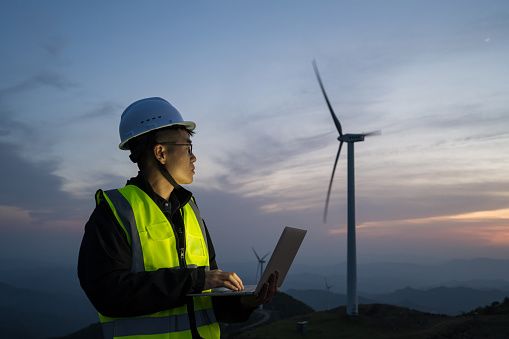

Green China
One central bank is leading the way on climate change. It’s not the Bank of England, the European Central Bank or the US Federal Reserve. In fact, it is the People’s Bank of China (PBoC).
That is according to research carried out by James Jackson from the University of Manchester and Mathias Larsen from the London School of Economics.
“There’s a common belief that central banks should stay out of politics and focus only on inflation. But climate change affects everything including food prices, energy bills and economic stability,” said Jackson. “Our research shows that China’s central bank is taking direct action because it is asked to do so by the government. Meanwhile, Western central banks often say climate action is ‘not in their mandate’, which has held them back.”
The study said the PBoC uses its financial tools to offer practical support for China’s green industries, for example, providing cheaper loans for renewable energy projects and allowing banks to borrow more easily for green investment. One programme alone has supported more than £120bn in green lending since 2021.
“We’re not saying countries should copy China’s political system,” said Jackson, “but we are saying that central banks around the world may need to rethink how they work with governments. In order to tackle climate change and adapt to its impacts, we need financial systems that can move quickly – not slowly.”


Hot air and high prices
In a recent interview with GB News, President Trump criticised the UK government for not prioritising oil and gas, saying: “Your energy costs are among the highest in the world, it’s crazy.”
The UK does indeed have some of the highest electricity bills in the developed world – although most sector experts agree this is due to our reliance on gas, not because we have too many wind farms.
Trump also appears to be ignoring what is happening in his own country, where energy bills are surging by an average of around 6% nationally. The reasons are manifold and fluctuate wildly from state to state. Yet in three states – Virginia, Illinois and Ohio – the rises are in double digits. And those three have one thing in common – data centres and lots of them.
In fact, Virginia has more data centres than anywhere else in the world (more than twice as many as the number two location, Beijing) and prices there rose 13% year on year compared with August 2024.
Those centres are consuming huge amounts of energy, and increasingly that is because of AI. Some Americans are so hooked on chatbots they won’t make a decision, on anything from where to go for lunch to choosing a baby’s name, without consulting one first.
The introduction of OpenAI’s video generator Sora 2 has created a further surge in consumption. And if you don’t regularly use AI, you may feel resentful about your bills rising because of Sora 2 spewing out thousands of fake videos of skydiving dogs.
Around 100 new data centres are coming to the UK, mostly concentrated around London and the south-east. As if consumers and businesses there don’t have enough to worry about with their utilities bills, thanks to the price rises being piped into their homes by Thames Water.
Trump’s solution is for the UK to drill for oil. That seems to be fuelled by his love of ‘legacy’ energy sources and his hatred of renewables. He sees wind farms as a blot on the landscape, spoiling the view from the fairways of his golf courses in Aberdeenshire.
Meanwhile, the states in America that have been able to reduce the wholesale prices of electricity are the ones that have invested heavily in renewable energy – including Texas. For boomers or Gen X, that state instantly conjures up images of oil wells and oil men, thanks to the TV soap opera Dallas. That was a fictional show rooted in Texas’s economic reality – something from which the real-life soap opera surrounding the current White House seems increasingly detached.
Ryan Herman
Hot air and high prices
In a recent interview with GB News, President Trump criticised the UK government for not prioritising oil and gas, saying: “Your energy costs are among the highest in the world, it’s crazy.”
The UK does indeed have some of the highest electricity bills in the developed world – although most sector experts agree this is due to our reliance on gas, not because we have too many wind farms.
Trump also appears to be ignoring what is happening in his own country, where energy bills are surging by an average of around 6% nationally. The reasons are manifold and fluctuate wildly from state to state. Yet in three states – Virginia, Illinois and Ohio – the rises are in double digits. And those three have one thing in common – data centres and lots of them.
In fact, Virginia has more data centres than anywhere else in the world (more than twice as many as the number two location, Beijing) and prices there rose 13% year on year compared with August 2024.
Those centres are consuming huge amounts of energy, and increasingly that is because of AI. Some Americans are so hooked on chatbots they won’t make a decision, on anything from where to go for lunch to choosing a baby’s name, without consulting one first.
The introduction of OpenAI’s video generator Sora 2 has created a further surge in consumption. And if you don’t regularly use AI, you may feel resentful about your bills rising because of Sora 2 spewing out thousands of fake videos of skydiving dogs.
Around 100 new data centres are coming to the UK, mostly concentrated around London and the south-east. As if consumers and businesses there don’t have enough to worry about with their utilities bills, thanks to the price rises being piped into their homes by Thames Water.
Trump’s solution is for the UK to drill for oil. That seems to be fuelled by his love of ‘legacy’ energy sources and his hatred of renewables. He sees wind farms as a blot on the landscape, spoiling the view from the fairways of his golf courses in Aberdeenshire.
Meanwhile, the states in America that have been able to reduce the wholesale prices of electricity are the ones that have invested heavily in renewable energy – including Texas. For boomers or Gen X, that state instantly conjures up images of oil wells and oil men, thanks to the TV soap opera Dallas. That was a fictional show rooted in Texas’s economic reality – something from which the real-life soap opera surrounding the current White House seems increasingly detached.
Ryan Herman
 Built with Shorthand